

Simple example:
const addOne = function () {
  let num = 10;

  return function () {
    return console.log(num++);
  };
};

const exp = addOne();
exp(); // 10
exp(); // 11
exp(); // 12

const expAdd = addOne();
expAdd(); //?
expAdd(); //?
expAdd(); //?
Try to solve this example on your own:
let appelAdd;

const appels = function () {
  const totalAppels = 10;

  appelAdd = function () {
    console.log(totalAppels + 1);
  };
};

appels();
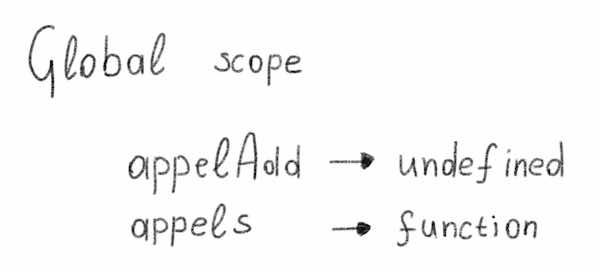
appelAdd(); //?- First, the global lexical environment is created:
- Then,
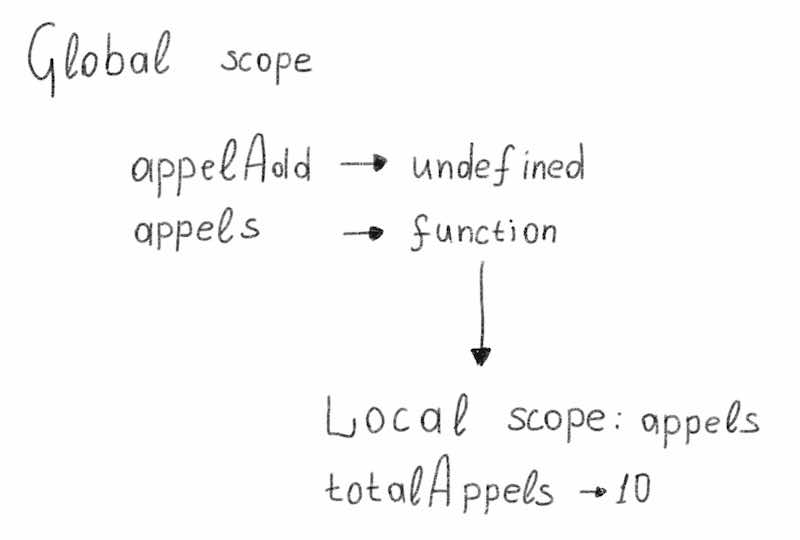
appels()is called.
- Inside
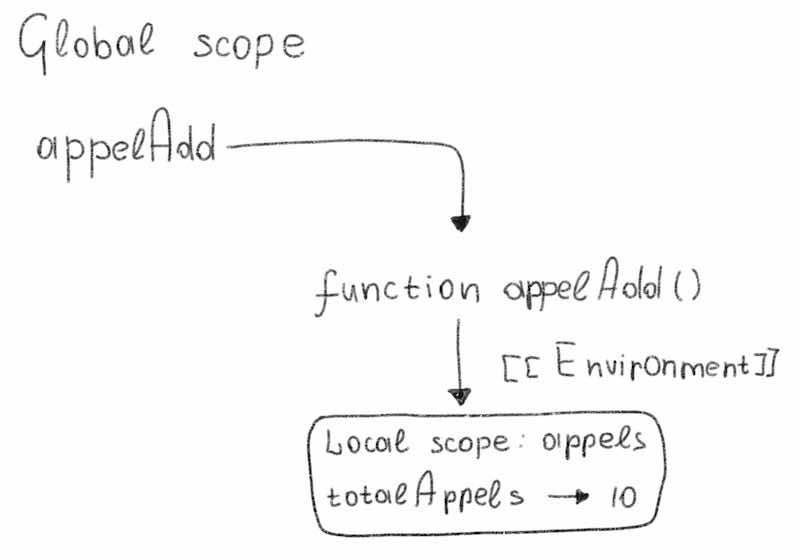
appels, a new function is created and assigned toappelAdd:
appelAdd = function () {
  console.log(totalAppels + 1);
};
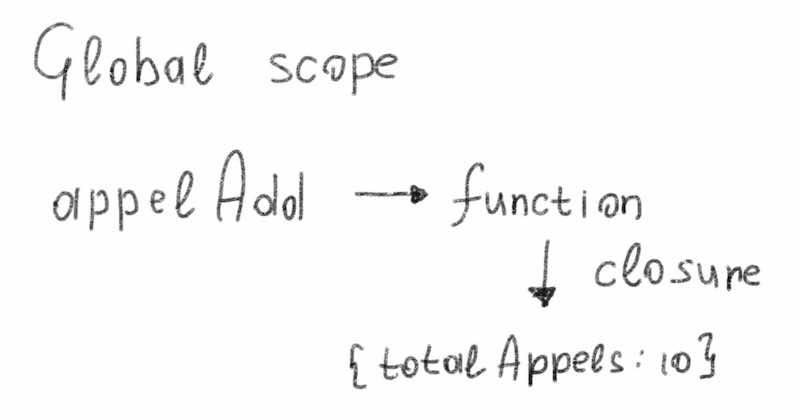
appels()→ finished. But its lexical environment is still accessible:
- Then,
appelAdd()is called. JavaScript executes the function.
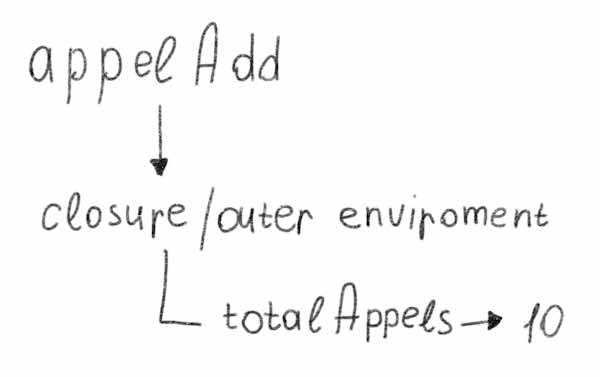
Main rule: a function remembers where it was created. The [[Environment]] reference is set once and for all when the function is created.